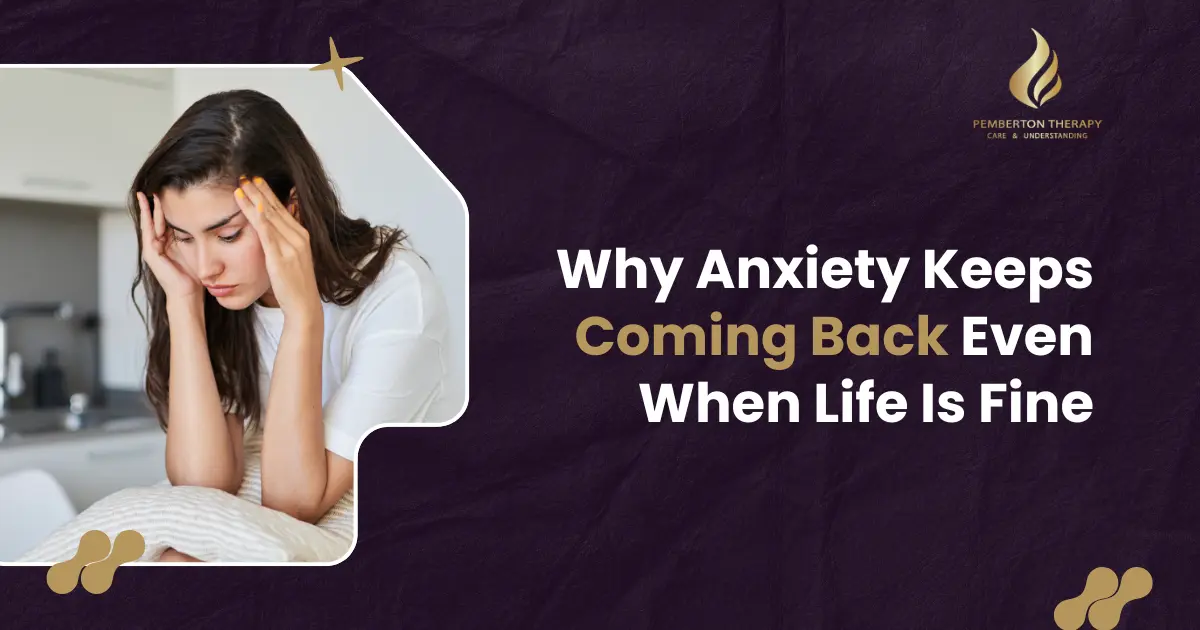
Many people feel confused when anxiety returns during calm periods. Life may feel stable, work may be manageable, and relationships may seem settled. Yet the mind still reacts with worry, tension, or unease.
This experience can feel frustrating and difficult to understand. People often ask why anxiety keeps coming back when nothing appears wrong.
The answer often lies beneath the surface. Anxiety is not always a response to what is happening now. It can be connected to deeper mental and emotional patterns that continue even when life feels calm.
Understanding Anxiety Beyond the Present Moment
Anxiety is not only a reaction to immediate stress. It can become a learned mental and physical pattern over time.
When someone has experienced stress, pressure, or emotional challenges in the past, the brain may become conditioned to stay alert. Even when external problems are no longer present, the mind may continue searching for possible threats.
For some individuals, calm periods can actually make anxiety more noticeable. When there are fewer distractions, the mind has more space to reflect and scan for uncertainty.
Why Anxiety Returns When Life Feels Fine
Anxiety can return during stable periods because it often operates as an ingrained pattern rather than a response to current danger.
In some cases, the mind may even interpret calmness as unfamiliar. When someone has been used to stress or pressure for a long time, the absence of that pressure can feel unusual or uncomfortable.
This can create a cycle where the mind continues generating worry, even when there is no immediate reason.
Psychological and Mental Patterns
Several thinking patterns can contribute to recurring anxiety.
Waiting for Something to Go Wrong
If someone has experienced difficult or unpredictable situations in the past, the brain may begin expecting those patterns to repeat.
Even during calm moments, the mind may think:
- “Something will go wrong soon”
- “This won’t last”
This expectation can create ongoing tension, even when life is stable.
Fear of Losing What Feels Good
When life improves, some people begin worrying about losing what they have gained.
Instead of feeling calm, the mind may shift toward protecting that sense of stability. This can create anxiety around change, loss, or uncertainty.
The Mind Filling Empty Space
When a major stressor is removed, the brain may not immediately settle. Instead, it can begin focusing on smaller concerns.
This can make minor issues feel much larger than they are. The mind continues its habit of searching for problems, even when there are none of real significance.
Loss of Direction or Purpose
After reaching a goal or moving past a stressful period, some individuals feel a sense of emptiness.
Without a clear focus, the mind may begin creating internal pressure or uncertainty. This can lead to overthinking and anxiety returning unexpectedly.
Biological and Nervous System Factors
Anxiety is also influenced by how the body and nervous system respond over time.
Ongoing Stress Responses
Even when life improves, the nervous system may remain in a heightened state of alertness.
This can create physical sensations such as:
- a racing heart
- dizziness or tension
- sudden waves of unease
These responses may occur even when there is no obvious cause.
The Body Adapting to High Alert
If someone has been in a state of stress for a long time, the body may become used to that level of alertness.
When calmness appears, it can feel unfamiliar. The nervous system may respond by creating tension, simply because it is more used to being active than relaxed.
Behavioural and Lifestyle Patterns
Certain behavioural patterns can also contribute to recurring anxiety.
High Internal Pressure
Some individuals continue placing pressure on themselves even when life is stable. They may expect high performance or feel the need to stay in control.
This internal pressure can keep the mind active and searching for problems.
Perfectionism and Control
A strong need for control can lead the mind to analyse situations constantly. Even in positive situations, the brain may look for possible mistakes or risks.
This can prevent the mind from fully settling into calm moments.
High-Functioning Anxiety
Some people appear calm and capable externally while experiencing ongoing internal worry.
They may manage responsibilities well, but still feel constant mental pressure. This pattern can allow anxiety to continue quietly beneath the surface.
The Subconscious Mind and Repeating Patterns
Many of these responses are influenced by the subconscious mind.
The subconscious stores emotional experiences and learned reactions. When certain patterns have been repeated over time, they can continue automatically.
This means anxiety may return not because something is wrong now, but because the mind is following familiar pathways.
Understanding these patterns is an important step in recognising why anxiety continues to appear.
The Role of Hypnosis for Anxiety
Because anxiety often involves subconscious patterns, approaches that work with the subconscious mind can be helpful in understanding these responses.
Hypnosis for anxiety focuses on how the brain processes emotional reactions, learned behaviours, and internal patterns.
Clinical hypnotherapy is a highly trained skill that requires deep understanding of how the brain works. Practitioners undertake extensive training and practical assessment to create a safe and supportive environment.
Within this space, individuals can begin exploring the deeper patterns that influence recurring anxiety. These patterns are often not immediately visible but become clearer through structured and guided techniques.
Many clients experience a greater sense of calm and clarity as they begin understanding how their mind responds to situations. Some individuals notice that their reactions feel less intense as these patterns are explored over time.
Understanding the Importance of Support
When anxiety keeps returning, it often indicates that the mind is responding to deeper patterns rather than current circumstances.
Exploring these responses with professional guidance can help bring clarity. A supportive environment allows individuals to speak openly and begin understanding what their mind may be processing.
At Pemberton Therapy we care and understand.
Providing a calm and respectful space allows people to explore their experiences without judgement and begin moving toward a more balanced state of mind.
A Final Thought
Anxiety can return even when life feels calm because it is often shaped by subconscious patterns, emotional memory, and nervous system responses.
Although this experience can feel confusing, it is more common than many people realise. The mind is often trying to protect the person based on past learning.
With the right understanding and supportive guidance, many individuals begin to notice that their responses become calmer over time. Speaking with a trained professional can provide a safe opportunity to explore these patterns and better understand why anxiety may continue to return.