Many people feel anxious without fully understanding why. They may not feel worried about anything specific, yet still notice a constant sense of unease in the background.
This experience can feel confusing. Life may appear stable, yet the mind and body continue reacting as though something is wrong.
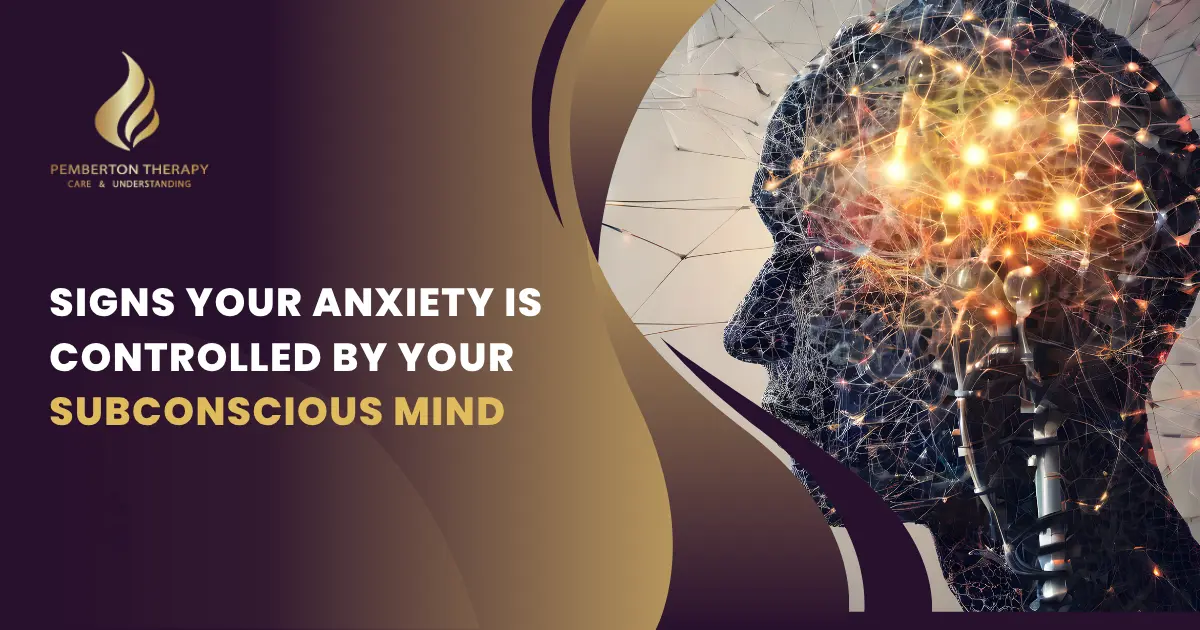
In many cases, this type of anxiety is influenced by the subconscious mind. It often exists beneath conscious awareness and can affect thoughts, emotions, and physical responses without clear explanation.
Understanding Subconscious Anxiety
Subconscious anxiety is a form of ongoing tension or unease that operates below conscious awareness. It may not feel like active worry or panic. Instead, it often appears as a constant background feeling that quietly influences behaviour and emotional responses.
People may describe it as:
- feeling unsettled without a clear reason
- a sense of tension that never fully goes away
- difficulty relaxing even during calm moments
Because this type of anxiety is not always obvious, it can be difficult to identify where it is coming from.
Why the Subconscious Mind Influences Anxiety
The subconscious mind stores emotional experiences, patterns, and learned responses. Over time, the brain builds automatic reactions based on past situations. When certain patterns become established, the mind may respond quickly without conscious input.
This means anxiety may appear even when the person does not feel actively worried. The brain may simply be following patterns it has learned previously.
Key Signs Your Anxiety Is Controlled by the Subconscious Mind
Recognising these signs can help individuals understand how anxiety may be operating beneath the surface.
Physical Symptoms Without a Clear Cause
The body often acts as an early signal for hidden stress.
Some individuals notice physical sensations that do not appear linked to any clear situation. These may include:
- constant muscle tension or jaw tightness
- recurring headaches
- ongoing stomach discomfort
- persistent fatigue despite rest
- dizziness or increased sweating
- noticeable changes in heart rhythm
These sensations can feel confusing, especially when there is no obvious cause. In many cases, the body is responding to subconscious stress patterns.
Behavioural Patterns and Emotional Responses
Subconscious anxiety often influences behaviour in subtle but consistent ways.
These patterns may include:
- perfectionism and a need to avoid mistakes
- avoiding situations that feel uncomfortable without knowing why
- overcommitting to meet expectations of others
- feeling emotionally overwhelmed by small situations
- repeating certain behaviours to feel in control
These responses are often automatic. They develop over time as the brain attempts to manage discomfort or uncertainty.
Cognitive Patterns and Mental Overload
Subconscious anxiety can also affect how the mind processes thoughts.
Some individuals experience:
- difficulty concentrating or mental fog
- repeated thinking patterns that feel hard to stop
- intrusive or unexpected thoughts
- a constant need to prepare for worst-case outcomes
These patterns can make it difficult to feel mentally clear or focused. The mind may feel busy even when there is no immediate reason.
Sleep Disturbances and Night Anxiety
For many people, subconscious anxiety becomes more noticeable at night. Even if the day feels manageable, the mind may become active once everything becomes quiet.
People may notice:
- difficulty falling asleep
- waking during the night with tension
- feeling unsettled without knowing why
This happens because the conscious mind becomes less active, allowing subconscious patterns to surface more clearly.
Persistent Background Unease
One of the most common signs is a constant sense of being “on edge.”
This may feel like:
- ongoing restlessness
- difficulty fully relaxing
- a sense that something is not quite right
The nervous system may remain active, even when there is no immediate stress. This is sometimes linked to a heightened “fight or flight” response operating in the background.
The Role of the Subconscious in Anxiety Patterns
When anxiety is influenced by the subconscious mind, it often follows repeated patterns rather than responding to present situations.
The brain may:
- react quickly to perceived uncertainty
- repeat emotional responses based on past experiences
- maintain a state of alertness even in calm environments
These patterns can feel automatic, which is why many people struggle to understand why their anxiety continues.
The Connection to Hypnosis for Anxiety
Because subconscious patterns play a central role in anxiety, approaches that work with the subconscious mind can provide valuable insight.
Hypnosis for anxiety focuses on understanding how emotional responses and behavioural patterns are formed within the subconscious mind.
Clinical hypnotherapy is a highly trained skill that requires a deep understanding of how the brain processes experiences. Practitioners undergo extensive training to create a safe and supportive environment where individuals can explore their thoughts and emotions.
Within this space, people can begin recognising the patterns that influence their anxiety. These patterns often become clearer when explored in a calm and structured way.
Many clients report experiencing greater clarity and a sense of calm as they begin understanding how their mind responds to situations. Some individuals notice that their reactions feel less intense as these subconscious patterns are explored over time.
Understanding the Importance of Support
When anxiety is influenced by subconscious patterns, it may not respond to surface-level understanding alone.
Exploring these patterns with professional guidance can help bring clarity and understanding. A supportive environment allows individuals to speak openly and begin recognising how their mind processes stress and emotional responses.
At Pemberton Therapy we care and understand.
Creating a calm and respectful space allows people to explore their experiences without judgement and begin moving toward greater emotional balance.
A Final Thought
Subconscious anxiety can feel difficult to explain because it often exists beneath conscious awareness. It may appear as physical sensations, repeated thoughts, or a constant sense of unease.
These responses are usually shaped by past experiences and learned patterns within the mind.
With the right understanding and supportive guidance, many individuals begin to notice that their reactions become clearer and easier to manage over time. Speaking with a trained professional can provide a safe opportunity to explore these patterns and better understand how the subconscious mind may be influencing anxiety.