Stress is a normal part of life. The brain is designed to respond to challenges, pressure, and uncertainty in ways that help keep us safe. However, for many people, the stress response does not simply switch off once the difficult situation has passed.
Even when life becomes calmer, some individuals continue feeling tense, alert, or emotionally exhausted. They may struggle to relax, find themselves constantly anticipating problems, or feel as though their mind is always “on.”
This experience can be confusing, especially when there is no obvious reason for the ongoing tension. Understanding why the brain stays in survival mode after stress can help explain what is happening beneath the surface and why approaches such as hypnosis for stress are often explored.
What Is Survival Mode?
Survival mode is the body’s natural response to perceived danger or threat. When the brain believes a person may be at risk, it activates the well-known fight-or-flight response. This response prepares the body to react quickly by increasing alertness and directing energy toward immediate protection.
In the short term, this response is extremely useful. It helps people respond to challenging situations and protect themselves when necessary. The difficulty occurs when the brain continues operating in this state long after the original stress has ended.
The Biological Shift That Happens During Stress
Stress does not only affect thoughts and emotions. It can influence how the brain and nervous system function over time. When stress becomes prolonged, the brain begins adapting to that environment.
The Amygdala Goes Into Overdrive
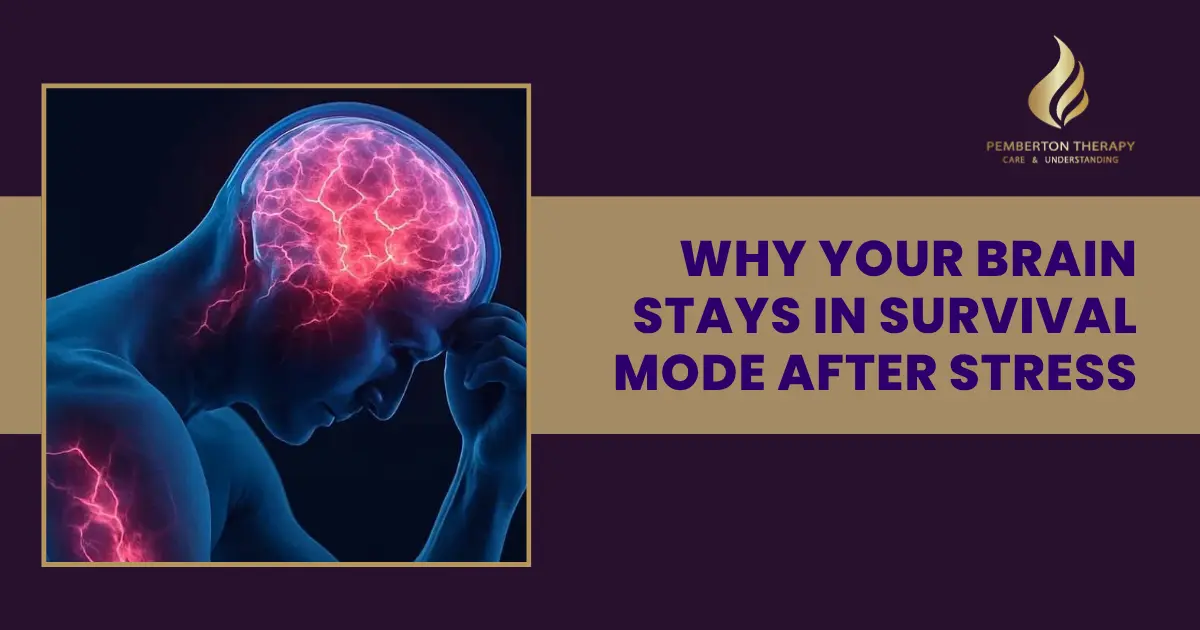
The amygdala, often referred to as the brain’s fear centre, plays a major role in detecting potential threats. During periods of ongoing stress, the amygdala can become highly active. Instead of only responding to genuine danger, it may begin scanning constantly for possible problems.
This can make neutral situations feel threatening and cause the brain to assume danger where none exists. For many people, this creates a feeling of being permanently “on guard.”
The Prefrontal Cortex Becomes Less Effective
The prefrontal cortex is responsible for logic, decision-making, emotional regulation, and perspective. During extended periods of stress, this area of the brain can become less efficient. The result is that emotional reactions may become stronger while rational thinking becomes harder to access.
This can make small challenges feel much larger than they really are.
The Nervous System Struggles to Switch Off
The nervous system contains two important processes.
- The sympathetic nervous system acts like the body’s accelerator, helping prepare for action.
- The parasympathetic nervous system acts like the body’s brake, helping restore calm and balance.
When stress continues for long periods, the accelerator may remain active while the brake struggles to engage properly. As a result, the body can remain in a heightened state of alertness even when there is no immediate danger.
Why the Brain Stays Stuck in Survival Mode
Many people assume that once a stressful event ends, the body should naturally return to normal. However, the brain often learns from repeated experiences.
Learned Anticipation
When stress becomes chronic, the brain begins expecting problems before they happen.
- Instead of asking: “Is this dangerous?”
- The brain starts assuming: “It probably is.”
Over time, high alertness becomes the brain’s default setting. This pattern can continue even when life has become calmer.
Unprocessed Emotional Experiences
The subconscious mind stores emotional experiences and learned responses. When stressful or overwhelming experiences remain unresolved, the brain may continue responding as though the situation is ongoing.
This can create a sense of constant vigilance and emotional tension. For some individuals, the body reacts as if the emergency never fully ended.
Survival Patterns Become Familiar
Over time, coping behaviours can become deeply ingrained. People may begin experiencing:
- constant productivity
- difficulty relaxing
- emotional numbness
- hypervigilance
- persistent worry
Eventually these responses can feel like personality traits rather than stress responses. However, many of these patterns are actually the brain’s attempt to maintain safety.
Signs Your Nervous System May Still Be in Survival Mode
When the nervous system remains activated, people may notice experiences such as:
- difficulty relaxing
- feeling constantly on edge
- racing thoughts
- emotional exhaustion
- muscle tension
- poor sleep
- feeling disconnected from enjoyment
- expecting something to go wrong
These experiences are often frustrating because the person may know logically that they are safe. Yet the body continues reacting differently.
The Role of the Subconscious Mind
Many stress responses operate below conscious awareness. The subconscious mind stores emotional memories, behavioural patterns, and protective responses developed over time.
When the brain learns that the world is unpredictable or unsafe, these patterns can continue running automatically. This is one reason why people often struggle to simply “think” their way out of survival mode.
The response is frequently deeper than conscious thought. It is connected to how the subconscious mind has learned to interpret safety, danger, and uncertainty.
The Connection to Hypnosis for Stress
Because many survival responses are influenced by subconscious patterns, hypnosis for stress focuses on understanding how those patterns developed and how they continue influencing daily life. Clinical hypnotherapy is a highly trained skill requiring extensive study, practical assessment, and professional accreditation.
A trained hypnotherapist develops a deep understanding of how the brain processes emotional experiences, behavioural responses, and subconscious learning. Within a safe and supportive environment, individuals can begin exploring the patterns that contribute to ongoing stress responses.
This process focuses on understanding:
- subconscious stress patterns
- emotional responses
- nervous system reactions
- learned protective behaviours
Many clients report gaining greater insight into why their mind and body continue reacting long after stressful situations have passed. Some individuals experience a growing sense of calm and emotional clarity as they continue exploring these patterns.
Understanding That Survival Mode Is Not a Weakness
Many people become frustrated with themselves when they cannot simply relax. It is important to understand that survival mode is not a personal failure. These responses are often the result of the brain doing exactly what it was designed to do — protect the individual.
The challenge is that the brain sometimes continues using old protective patterns long after they are needed. Understanding this can help reduce self-criticism and create a more compassionate perspective toward these experiences.
A Final Thought
When the brain remains in survival mode after stress, it is often responding to learned patterns rather than present circumstances. Changes within the nervous system, subconscious mind, and emotional memory can keep the body in a state of alertness even when life has become calmer. Understanding these patterns can help explain why stress responses sometimes continue long after difficult situations have ended.
At Pemberton Therapy we care and understand.
With the right support and understanding, many individuals begin to gain greater insight into these responses and develop a clearer understanding of how their mind and body are working together.