Understanding Grief
Grief is a natural response to loss. It reflects the depth of connection and meaning. It is not something to rush. It is the mind and body adjusting to a reality that feels deeply painful. Loss can include:
- The death of a loved one
- The end of a relationship
- Loss of health
- Loss of identity or purpose
- Major life changes
Grief affects everyone differently. Some people cry openly. Others feel numb. Some move between intense emotion and quiet withdrawal. All of these responses are valid. For many people, grief gradually softens over time. However, sometimes grief can feel stuck.
What Does “Stuck Grief” Mean?
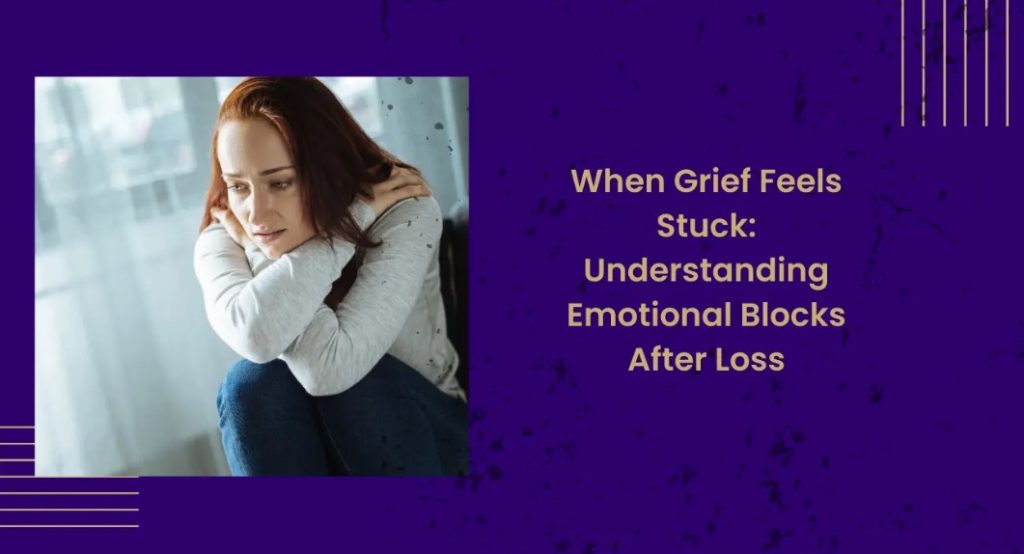
When grief feels stuck, it may seem like time has stopped emotionally. Months or even years may pass, yet the pain feels just as raw.
You may notice:
- Persistent sadness that does not ease
- Emotional numbness
- Sudden waves of intense emotion
- Guilt or regret that feels overwhelming
- Avoidance of reminders
- Difficulty speaking about the loss
- Feeling disconnected from others
Grief that feels stuck does not mean you are grieving incorrectly. It often means something inside has not yet felt safe enough to process fully.
Why Emotional Blocks Can Form
After a significant loss, the nervous system can become overwhelmed. If the emotional intensity feels too much, the mind may create protective blocks. These blocks are not conscious decisions. They are survival responses.
For example:
- If the loss was sudden, the shock may remain unresolved.
- If there were unfinished conversations, guilt may become frozen.
- If others expected you to “be strong,” emotions may have been suppressed.
- If the loss triggered earlier pain, layers of grief may overlap.
When emotions are not processed gradually and safely, they may become held in the body and subconscious mind. This can create a sense of emotional paralysis.
How Grief Lives in the Body
Grief is not only emotional. It is physical. Many people experiencing prolonged grief report:
- Tightness in the chest
- Fatigue
- Changes in appetite
- Sleep disturbance
- A heavy sensation in the body
- Low motivation
The body remembers what the heart has endured. When grief remains unprocessed, the nervous system can stay in a protective state. It may alternate between shutdown and heightened emotion. Neither state feels stable.
The Role of the Subconscious Mind
Grief often involves complex emotions. Love, anger, sadness, regret, relief, and guilt can exist at the same time. The subconscious mind stores these emotional layers. If certain feelings feel unacceptable or overwhelming, they may be pushed down.
Common subconscious patterns include:
- “If I stop feeling sad, I am betraying them.”
- “I should have done more.”
- “I must stay strong.”
- “I cannot survive this pain.”
These beliefs can quietly maintain emotional blocks. Until they are gently explored and updated, the grief response may remain active.
Why Talking Alone May Not Shift It
Sharing your story is important. Being heard matters. However, when grief is deeply stored in the nervous system, conversation alone may not fully release the emotional imprint.
The body may still react automatically to reminders. Tears may appear without warning. Or numbness may persist despite understanding the loss logically.
This happens because grief can become embedded in implicit memory. Implicit memory is emotional and sensory. It does not always respond to reasoning. A deeper approach may be required to support release.
How Clinical Hypnosis Supports Emotional Processing
Clinical hypnosis is a structured therapeutic approach that allows focused attention and deep internal awareness. In this state, the nervous system can shift into a calmer and more regulated condition.
When safety is established, it becomes possible to gently explore:
- Unresolved emotional responses
- Subconscious beliefs linked to the loss
- Stored guilt or regret
- Emotional shock patterns
The process is gradual and respectful. There is no pressure to relive distressing experiences intensely. Many people experiencing stuck grief report:
- A softening of emotional intensity
- Greater acceptance
- Reduced physical heaviness
- Improved sleep
- Increased ability to remember without overwhelming pain
Every experience is unique. There are no guarantees. However, many clients experience noticeable shifts when emotional blocks are addressed in a safe and structured way.
The Importance of Emotional Safety
Grief work requires patience. Emotional safety must always come first. Before any deeper exploration, time is taken to:
- Build trust
- Establish clear boundaries
- Create a calm internal state
- Ensure the client feels in control
Without safety, the nervous system remains guarded. With safety, it becomes more flexible and open to release. Emotional blocks soften when the mind no longer feels it must protect you from the pain.
You Are Not Grieving Wrong
It is common to judge yourself during grief. You may wonder why you are not ‘moving on.’
There is no correct timeline. There is no standard way to feel.
If grief feels stuck, it does not mean you are broken. It often means your system is still protecting you.
With the right support, many people find that grief does not disappear, but it changes.
Taking the Next Step
If grief continues to feel heavy or frozen, gentle support may help you move forward at your own pace. A 15-minute conversation can provide clarity about what this process may look like and whether it feels right for you. You do not need to carry unresolved pain alone. Support begins with understanding, safety, and Care and Understanding.