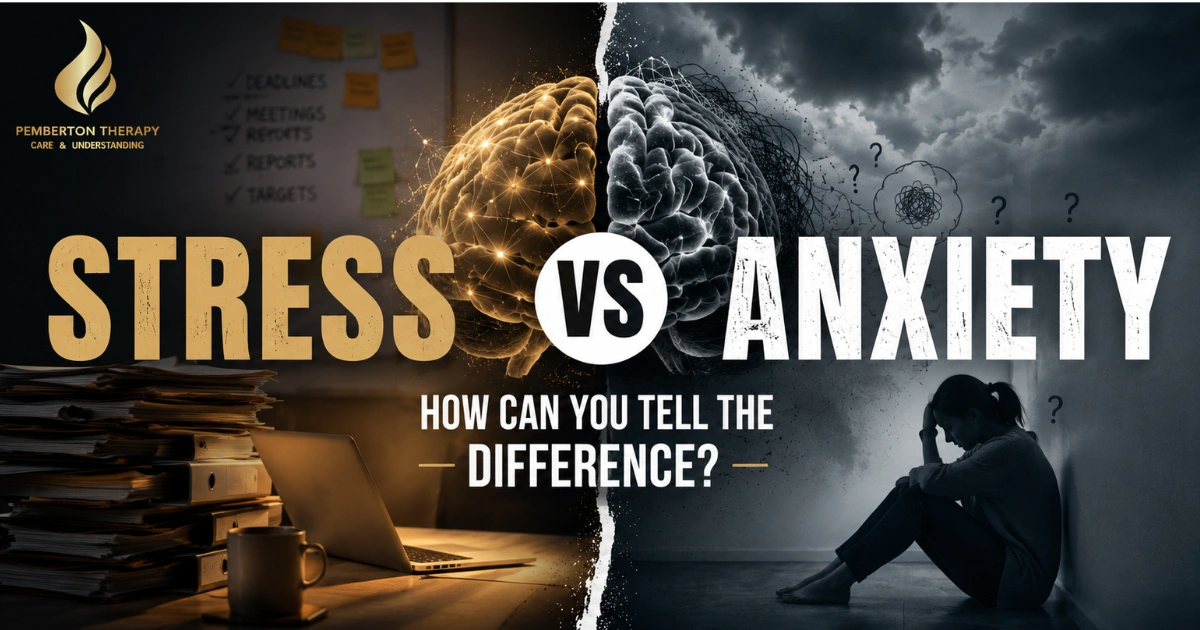
Stress and anxiety can feel remarkably similar. Both can leave you tense, restless, overwhelmed, or unable to switch off your thoughts. When these feelings continue, understanding what is actually happening can become difficult.
There is, however, an important difference. Stress is usually connected with an identifiable pressure or demand, while anxiety can continue even when the immediate pressure has passed or there is no obvious threat.
For some people, the two also become closely connected. Repeated stress can influence subconscious patterns and emotional responses, leaving the brain expecting danger even during calmer periods.
Understanding the difference between stress and anxiety can provide valuable clarity. It can also explain why hypnosis for anxiety may be explored when anxious responses seem to continue beneath conscious awareness.
What Is Stress?
Stress is a natural response to pressure, challenge, or change. It can develop when the brain believes that current demands require greater attention or action.
Work deadlines, financial concerns, relationship difficulties, major changes, and ongoing responsibilities can all contribute to stress. The mind and body respond by becoming more alert and prepared to manage the situation.
Once the source of pressure passes, the stress response will often begin to settle. However, prolonged or repeated stress can sometimes make this process more complicated.
How Stress Can Feel
Stress affects people differently and may influence emotions, thoughts, behaviour, and physical sensations.
Someone experiencing ongoing stress may notice:
- irritability or frustration
- difficulty concentrating
- racing thoughts
- muscle tension
- feeling emotionally overwhelmed
- difficulty mentally switching off
- changes in sleep
- feeling constantly under pressure
These responses often make sense when considered alongside what is happening in the person’s life.
Stress Usually Has an Identifiable Cause
One important characteristic of stress is that people can often identify its source.
Someone may say, “Work is putting me under enormous pressure,” or “I am worried about everything I need to manage.”
The emotional response is connected to something happening around them. When circumstances improve, the intensity of that stress may also change.
What Is Anxiety?
Anxiety can involve worry, fear, apprehension, or a persistent feeling that something is wrong. Unlike ordinary stress, the emotional response may continue without a clear immediate cause.
Someone may have a relatively stable life but still feel unable to relax. Their mind might repeatedly anticipate problems, while their body remains tense or alert.
This does not mean the experience is imagined or unimportant. Anxiety can feel extremely real because the brain and nervous system may be responding to perceived danger rather than an obvious external threat.
How Anxiety Can Feel

Anxiety can affect both emotional and physical experiences.
People may notice:
- persistent worry
- overthinking
- feelings of dread
- restlessness
- difficulty concentrating
- feeling constantly on edge
- increased sensitivity to uncertainty
- physical tension
- difficulty feeling calm
Some individuals can identify exactly what they are worried about. Others experience anxiety without understanding why it keeps appearing.
Anxiety Can Continue When Life Seems Fine
This is where anxiety can become particularly confusing.
The stressful situation may have ended, yet the brain continues behaving as though something could go wrong.
Someone may consciously recognise that everything is currently safe while still experiencing an automatic feeling of unease.
This difference between conscious understanding and emotional response can provide an important clue that deeper learned patterns may be involved.
Stress vs Anxiety: What Is the Main Difference?
The clearest difference usually involves what is driving the emotional response and whether that response changes when circumstances improve.
Stress tends to be connected with present demands. Anxiety may continue because the brain has learned patterns of anticipation, fear, or heightened alertness that remain active beyond the original pressure.
The distinction is not always perfectly clear. Stress and anxiety can overlap, and prolonged stress may contribute to ongoing anxious responses.
Stress Often Responds to What Is Happening Now
With stress, the brain is generally reacting to a current challenge.
There is a deadline, conflict, responsibility, change, or another identifiable source of pressure.
The response is connected with the circumstances.
Anxiety Often Focuses on What Might Happen
Anxiety frequently involves anticipation.
The mind may become occupied with questions such as:
“What if something goes wrong?”
“What if I cannot cope?”
“What if this happens again?”
The feared situation may never happen, but the brain can still respond as though preparation is necessary.
When Stress and Anxiety Overlap
Repeated stress can teach the brain to remain alert.
If someone spends a long period dealing with uncertainty or emotional pressure, heightened awareness can become familiar. The brain may then continue anticipating problems even after the original circumstances improve.
This is one reason the boundary between chronic stress and persistent anxiety can sometimes feel unclear.
Why the Brain Responds Differently to Stress and Anxiety

Both stress and anxiety involve the brain’s protective systems. These systems continuously assess what is happening and decide whether greater alertness is required.
The amygdala, which plays an important role in detecting possible threats, can activate when danger is perceived. The nervous system then prepares the body to respond.
With stress, this response usually relates to something identifiable. With anxiety, the alarm can sometimes remain active because of subconscious associations, emotional memories, or learned expectations.
The Brain Can Learn to Expect Problems
The brain learns through repetition.
If someone repeatedly experiences stress, uncertainty, criticism, conflict, or emotionally difficult situations, the brain may become increasingly prepared for similar experiences.
Eventually, anticipation itself can become automatic.
A person may begin expecting problems before anything has actually happened. This can contribute to persistent anxiety and hypervigilance.
Emotional Memory Can Influence Present Reactions
The brain does not respond only to current events.
Previous emotional experiences can influence how present situations are interpreted. Something that resembles an earlier difficult experience may activate an emotional response without the person consciously recognising the connection.
This is where the subconscious mind becomes particularly relevant.
The Subconscious Mind and Anxiety
The subconscious mind holds learned associations, emotional responses, behavioural patterns, and memories that influence everyday reactions.
Many of these processes happen automatically.
A person may consciously know that a situation is safe while their subconscious responds according to earlier experiences. This can create anxiety that seems disconnected from what is actually happening.
For some people, these subconscious anxiety patterns help explain why logical reassurance alone does not change how they feel.
Why Anxiety Can Feel Difficult to Switch Off
Trying to reason with anxiety can be frustrating when the response is automatic.
Someone may understand that their worry is unlikely to become reality. They might even recognise that their reaction feels much stronger than the situation requires.
Yet the emotional response continues.
This can happen because subconscious threat responses often activate before conscious reasoning has fully assessed the situation.
Can Long-Term Stress Become an Anxiety Pattern?
Long periods of stress can influence how the brain responds to future situations. When someone remains under pressure for an extended time, heightened alertness may gradually become familiar.
The original stressor may eventually disappear, but the learned response can remain.
This does not mean everyone experiencing prolonged stress will develop persistent anxiety. Individual experiences vary considerably.
However, understanding the connection can help explain why some people continue feeling tense or apprehensive after life becomes calmer.
When Being on Alert Becomes Familiar
The brain generally prefers familiar patterns because they feel predictable.
After extended stress, calmness itself may feel unfamiliar. The subconscious may continue scanning for potential problems because constant alertness has become an established protective response.
This can create the uncomfortable feeling of waiting for something to go wrong.
Where Hypnosis for Anxiety Fits
When anxiety appears to involve subconscious emotional patterns, hypnosis for anxiety may be explored as a professionally guided approach.
Clinical hypnotherapy involves much more than simply creating relaxation. It requires training, practical experience, emotional awareness, and an understanding of how subconscious patterns can influence thoughts and behaviours.
A professionally guided hypnotherapy process may explore the emotional associations and learned responses contributing to anxiety while maintaining an environment built around safety, trust, and connection.
Exploring the Patterns Beneath Anxiety
Hypnotherapy can focus on understanding patterns such as:
- subconscious anxiety triggers
- learned fear responses
- anticipatory anxiety
- emotional memories
- recurring worry patterns
- automatic protective responses
The intention is not to dismiss the person’s anxiety or simply tell them to feel calm.
Instead, the process considers why the mind developed particular responses and why those responses may still be operating.
Looking Beyond Surface-Level Stress
This distinction matters when anxiety continues after the original stress has disappeared.
If deeper emotional associations are contributing to the response, simply removing the immediate pressure may not address those patterns.
Many clients report developing greater understanding of their emotional responses through professionally guided hypnotherapy. Some individuals also describe changes in how strongly previously familiar anxiety patterns affect them, although experiences and outcomes vary.
Why Understanding the Difference Matters
Understanding whether an experience feels more connected to stress, anxiety, or a combination of both can provide useful clarity.
It can help someone recognise whether their mind is responding mainly to present circumstances or continuing a protective pattern learned through previous experiences.
Most importantly, neither experience should be minimised. Persistent stress and anxiety can have a meaningful impact on someone’s emotions, relationships, confidence, and everyday life.
At Pemberton Therapy we care and understand.
Professional support provides an opportunity to explore these experiences safely and understand the subconscious patterns that may be contributing to ongoing anxiety.
A Final Thought
Stress and anxiety can share many characteristics, but their underlying patterns are often different.
Stress usually develops in response to identifiable pressures and may reduce when those pressures change. Anxiety can continue even when circumstances are calm because emotional memory, subconscious associations, and learned threat responses may still be active.
The two can also overlap. Repeated stress may influence how the brain learns to anticipate uncertainty, allowing an originally temporary response to become a familiar emotional pattern.
This helps explain why hypnosis for anxiety may be explored when anxiety continues beyond an obvious stressful situation.
Understanding what is happening beneath the surface can provide meaningful clarity. With appropriate professional support, individuals can explore these responses in a safe, respectful environment where their experiences are heard and taken seriously.