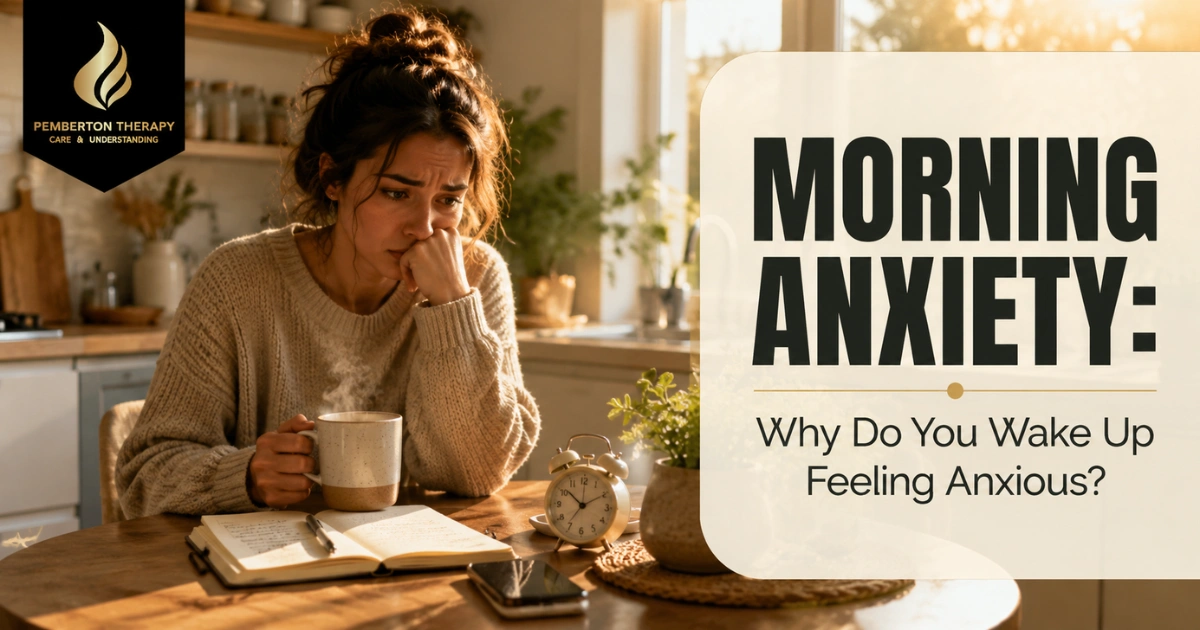
Waking up should feel like the beginning of a new day. Yet for some people, the first feeling they notice is anxiety.
Your eyes may open and your mind immediately starts racing. You might feel tense, unsettled, or worried before anything has actually happened. Sometimes there is an obvious concern waiting for you, while other mornings the anxiety seems to arrive without any clear reason.
This experience can be particularly confusing when you went to bed feeling relatively calm.
Morning anxiety can be influenced by the body’s natural waking processes, ongoing stress, emotional patterns, poor sleep, and the way the subconscious mind anticipates what lies ahead. Understanding these connections can also explain why Hypnosis for Anxiety may be explored when anxious responses have become automatic or difficult to understand.
What Is Morning Anxiety?

Morning anxiety describes feelings of anxiety, apprehension, or heightened tension that appear when someone wakes or shortly afterwards. It is a useful description of an experience rather than a separate condition in itself.
For some people, these feelings disappear as the morning progresses. For others, waking anxiety can influence much of the day.
The experience varies considerably, but people may notice:
- racing thoughts soon after waking
- a sense of dread about the day
- feeling tense or restless
- a racing or noticeable heartbeat
- difficulty concentrating
- feeling emotionally overwhelmed
- expecting something to go wrong
- unexplained nervousness
These experiences can feel very real even when the person cannot identify an immediate problem.
Why Can Anxiety Begin Before You Start Thinking?
One of the most confusing parts of morning anxiety is its speed.
Sometimes the physical feeling appears before there is a conscious anxious thought. A person wakes already feeling unsettled and then begins searching for an explanation.
This can happen because many emotional and nervous system responses operate automatically. Conscious thought is only one part of how the brain determines whether something feels safe or threatening.
What Happens in Your Brain and Body When You Wake?

Waking involves a natural biological transition. Your brain and body need to move from sleeping into an alert state that prepares you for the day.
Part of this process involves changes in hormones, alertness, heart rate, and brain activity. These changes are normal, but someone already experiencing heightened anxiety may notice them more strongly.
This can help explain why anxiety sometimes feels particularly noticeable during the first part of the morning.
Cortisol Naturally Changes Around Waking
Cortisol is a hormone involved in alertness, energy regulation, and the body’s stress response.
Cortisol levels naturally change across the day and commonly increase around waking. This process helps prepare the body to become active.
The presence of cortisol does not automatically mean something is wrong.
However, people experiencing ongoing stress or anxiety may feel particularly sensitive to the physical and emotional changes occurring during this waking period.
The Brain Moves Back Into Alert Mode
During sleep, conscious awareness of daily responsibilities becomes reduced.
When you wake, attention returns to your surroundings, responsibilities, memories, and expectations.
If the brain has learned to anticipate difficulty, this return to alertness can quickly reactivate familiar anxiety patterns.
The result can be an immediate sense that the day feels threatening before anything difficult has actually occurred.
Why Does Anxiety Feel Worse in the Morning?
There is rarely one explanation that applies to everyone. Morning anxiety can reflect several overlapping processes involving sleep, stress, emotional memory, anticipation, and subconscious learning.
For some people, the strongest influence is worry about what the day may bring. For others, their nervous system appears to remain highly alert even when their circumstances are relatively stable.
Understanding these patterns can provide useful context for why waking feels emotionally difficult.
Anticipatory Anxiety Can Begin Immediately
Anxiety often focuses on what might happen rather than what is happening now.
As soon as someone wakes, their mind may begin anticipating:
- work responsibilities
- difficult conversations
- social situations
- uncertainty
- important decisions
- possible mistakes
- events they cannot control
The event has not happened, but the brain may already be responding emotionally.
The Brain Can Prepare for Problems Before They Exist
When anticipatory anxiety becomes established, the brain can begin treating possibility like probability.
A thought such as “Something could go wrong today” can gradually feel more like “Something will go wrong today.”
This expectation can activate emotional and physical responses before there is any evidence of danger.
The Subconscious Mind May Already Expect the Day to Be Difficult
The subconscious mind learns through repetition and emotional experience.
If mornings have repeatedly been associated with pressure, conflict, uncertainty, responsibility, or previous anxiety, waking itself can become connected with those emotional responses.
The person does not consciously choose this reaction.
Instead, the brain may have learned an association between starting the day and needing to become immediately alert.
Morning Anxiety Can Become a Learned Pattern
Repeated emotional experiences can create powerful associations.
If someone wakes feeling anxious regularly, the brain can gradually become familiar with that pattern. The waking period itself may begin acting as a subconscious signal for heightened alertness.
This can create a difficult cycle where the person starts expecting morning anxiety because it has happened so many times before.
The expectation can then become another part of the anxiety pattern.
Why You Can Wake Anxious When Life Is Going Well
Morning anxiety can feel especially confusing when there is no obvious problem.
Work may be manageable. Relationships may feel stable. Nothing significant may be happening that day, yet the familiar anxious feeling still appears.
This can happen because subconscious responses are influenced by previous learning as well as present circumstances.
The Brain May Still Be Operating From Previous Stress
After extended periods of stress, heightened alertness can become familiar.
Even when circumstances improve, the brain may continue anticipating the pressure it has learned to expect.
Consciously, the person understands that things are better.
Subconsciously, the protective response may not have changed at the same pace.
This difference helps explain why someone can genuinely believe everything is fine while still waking with a powerful sense of anxiety.
The Connection Between Sleep and Morning Anxiety
Sleep and anxiety can influence each other closely. An anxious mind may affect sleep, while disrupted or poor-quality sleep can leave someone feeling more emotionally sensitive after waking.
The important point is that morning anxiety does not always begin in the morning itself. Emotional processing and nervous system activity continue while someone sleeps.
For some individuals, waking simply makes an existing pattern noticeable again.
Night-Time Worry Can Carry Into the Morning
Someone who goes to sleep with unresolved worry may find similar emotional patterns returning after waking.
The exact thoughts may change, but the underlying feeling of uncertainty can remain.
This is particularly relevant when anxiety has become a repeated subconscious pattern rather than a response to one isolated concern.
Difficult Dreams Can Influence Waking Emotions
Dreams can also involve emotionally significant material.
Someone may wake feeling anxious, frightened, or unsettled without clearly remembering what they were dreaming about.
The emotional response can remain temporarily present even when the conscious mind cannot identify its source.
Emotional Memory Can Influence How You Wake
Emotional memory plays an important role in anxiety.
The brain remembers more than facts. It also learns emotional associations connected with experiences, people, situations, and periods of life.
These associations can influence present-day responses without entering conscious awareness.
Past Experiences Can Shape Present Expectations
Someone who previously experienced prolonged uncertainty may develop a strong expectation that problems can appear unexpectedly.
Another person may have spent years waking to pressure, responsibility, conflict, or emotional difficulty.
Even after those circumstances change, the subconscious may continue associating mornings with the need to prepare for something difficult.
This does not mean the past determines the future. It means previous emotional learning can influence how present situations are interpreted.
When Morning Anxiety Is Connected to Hypervigilance
Hypervigilance describes a state of heightened awareness where the brain remains particularly sensitive to possible threats.
Someone experiencing this pattern may feel as though part of their mind is constantly scanning for what could go wrong.
Morning can quickly reactivate this alertness because waking means reconnecting with the outside world.
The Brain’s Alarm System May Be Highly Sensitive
The amygdala plays an important role in detecting potential danger.
When threat-detection patterns become highly sensitive, the brain may respond strongly to uncertainty or subtle emotional cues.
This can contribute to feelings such as:
- unexplained dread
- heightened nervousness
- emotional tension
- expecting difficulty
- feeling unsafe without knowing why
These responses can occur before conscious reasoning has fully assessed the day ahead.
Why Telling Yourself There Is Nothing to Worry About May Not Work
Many people experiencing morning anxiety already know logically that they are safe.
They may look at their day and recognise that nothing particularly threatening is happening. Yet the anxious feeling remains.
This can be frustrating because conscious reassurance and subconscious emotional responses do not always operate in the same way.
The logical mind can recognise safety while an automatic protective response continues beneath conscious awareness.
Anxiety Is Not Always a Conscious Decision
Anxiety can involve learned associations and automatic responses rather than deliberate thinking.
This is why someone cannot necessarily switch anxiety off simply by recognising that their worries are unlikely.
Understanding this difference can reduce some of the confusion surrounding persistent morning anxiety.
Understanding Hypnosis for Anxiety
When morning anxiety appears connected with subconscious learning, emotional memory, or automatic fear responses, Hypnosis for Anxiety may be explored as a professionally guided approach.
Clinical hypnotherapy involves more than helping someone temporarily relax. It requires professional training, practical experience, emotional awareness, and an understanding of subconscious processes.
The approach can explore how certain anxiety patterns developed and why the mind may continue using them even when present circumstances have changed.
Exploring Subconscious Anxiety Patterns
Professionally guided hypnotherapy may explore patterns involving:
- subconscious anxiety triggers
- anticipatory anxiety
- learned fear responses
- emotional memories
- heightened threat awareness
- recurring worry patterns
- associations between waking and anxiety
The purpose is not to tell someone that their anxiety should disappear.
Instead, the process seeks to understand why the mind developed these responses and what may be maintaining them.
Looking Beneath the Morning Symptoms
The time anxiety appears does not necessarily explain where the pattern began.
Waking anxiety may be connected with earlier emotional experiences, prolonged stress, subconscious expectations, or learned associations around responsibility and uncertainty.
Exploring those deeper connections can provide a different understanding of why mornings have become emotionally difficult.
Many clients report gaining greater clarity around their anxiety patterns through professionally guided hypnotherapy. Some individuals also describe changes in how strongly familiar emotional triggers affect them, although every person’s experience is different.
Morning Anxiety Deserves to Be Taken Seriously
Repeatedly waking with anxiety can affect how someone experiences the entire day.
It can influence confidence, concentration, relationships, work, and the ability to feel settled during otherwise positive periods of life.
The absence of an obvious external problem does not make the experience insignificant.
At Pemberton Therapy we care and understand.
A safe and supportive professional environment can provide an opportunity to explore the emotional and subconscious patterns that may be contributing to waking anxiety without judgement or pressure.
A Final Thought
Morning anxiety can occur because waking involves much more than simply opening your eyes.
Natural changes in alertness occur as the body prepares for the day, while the mind reconnects with responsibilities, memories, expectations, and emotional patterns. For someone already experiencing anxiety, these processes can make anxious responses particularly noticeable after waking.
Subconscious learning can also play an important role. Previous stress, anticipatory anxiety, emotional memory, and heightened threat awareness may cause the brain to prepare for difficulty before the day has even begun.
This helps explain why Hypnosis for Anxiety may be explored when morning anxiety feels automatic or continues without an obvious present-day reason.
Understanding what may be happening beneath the surface can provide valuable clarity. Professional hypnotherapy offers a structured and supportive setting for exploring these deeper patterns while recognising that each person’s experience, circumstances, and response to hypnotherapy will be individual.